Topics
2025.12.11
Orbicular batfish successfully bred for the first time in Japan. Juvenile orbicular batfish look like withered leaves!
Orbicular batfish have been successfully bred in an aquarium for the first time in Japan. Okinawa Churaumi Aquarium has begun showing the juveniles to visitors in the Coral Reef Gallery.
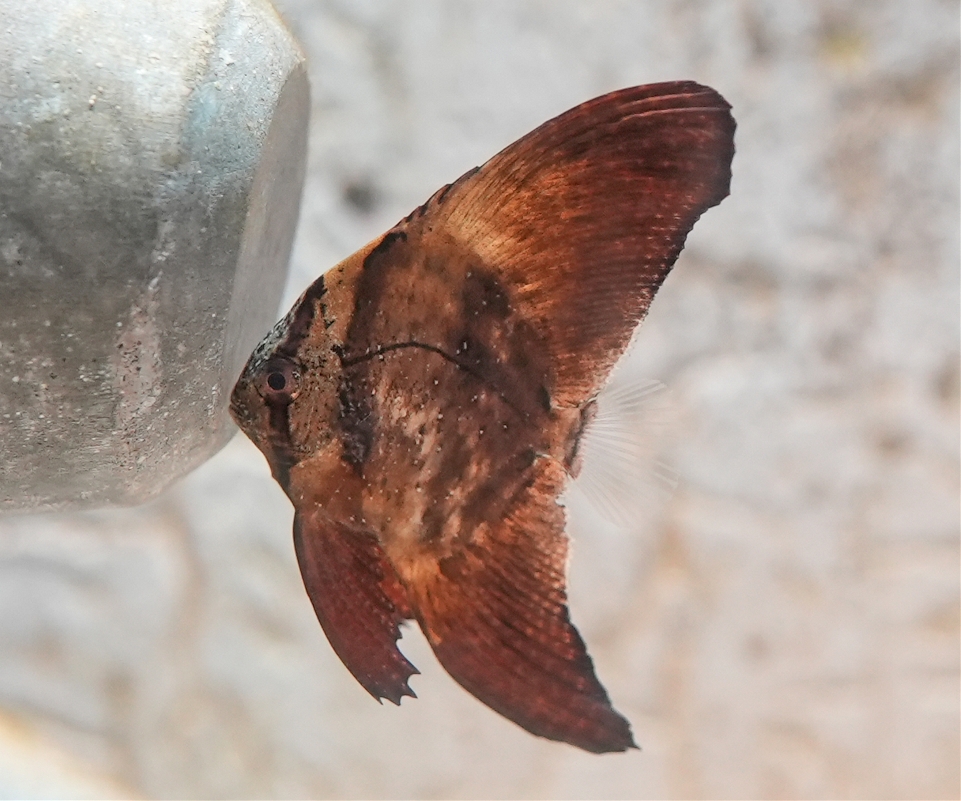
A juvenile orbicular batfish
《ナンヨウツバメウオ》
Scientific name:Platax orbicularis
English name:Orbicular batfish
This species of batfish (Ephippidae family) is distributed in Japanese waters from Iwate Prefecture to Okinawa Prefecture. Adults reach 50 cm in length. Juveniles look like withered brown leaves. When swimming, they appear to be drifting in the water. Juveniles are often seen near the surface of fishing ports and river estuaries. Adult orbicular batfish are silvery. They inhabit coral reefs, and swim in schools ranging from a few fish to several dozen.
Place of exhibit
Journey to a Coral Reef
Size of Exhibit
2individuals (length 6㎝)
*Exhibit may close depending on the condition of the animals.
The three parent fish were sourced between 2013 and 2016 from northern Okinawa Main Island. In the evening of September 14th, 2025, the two male fish were observed to be actively pursuing the female. On the morning of the 18th, we retrieved fertilized eggs that were around 1.3 mm in diameter, and placed them in a hatching tank. The eggs hatched that evening. The fertilized eggs (eyed eggs) of most marine fish float, but the fertilized eggs of this species sank to the bottom of the salt water (32 psu) hatching tank. Orbicular batfish larvae are rounded at the front. Two weeks after hatching, the larvae were swimming near the bottom of the tank. After another two days, their body height rapidly increased, and they began to look like the withered leaves they resemble as juveniles. During these physiological changes, they also began to swim closer to the surface.
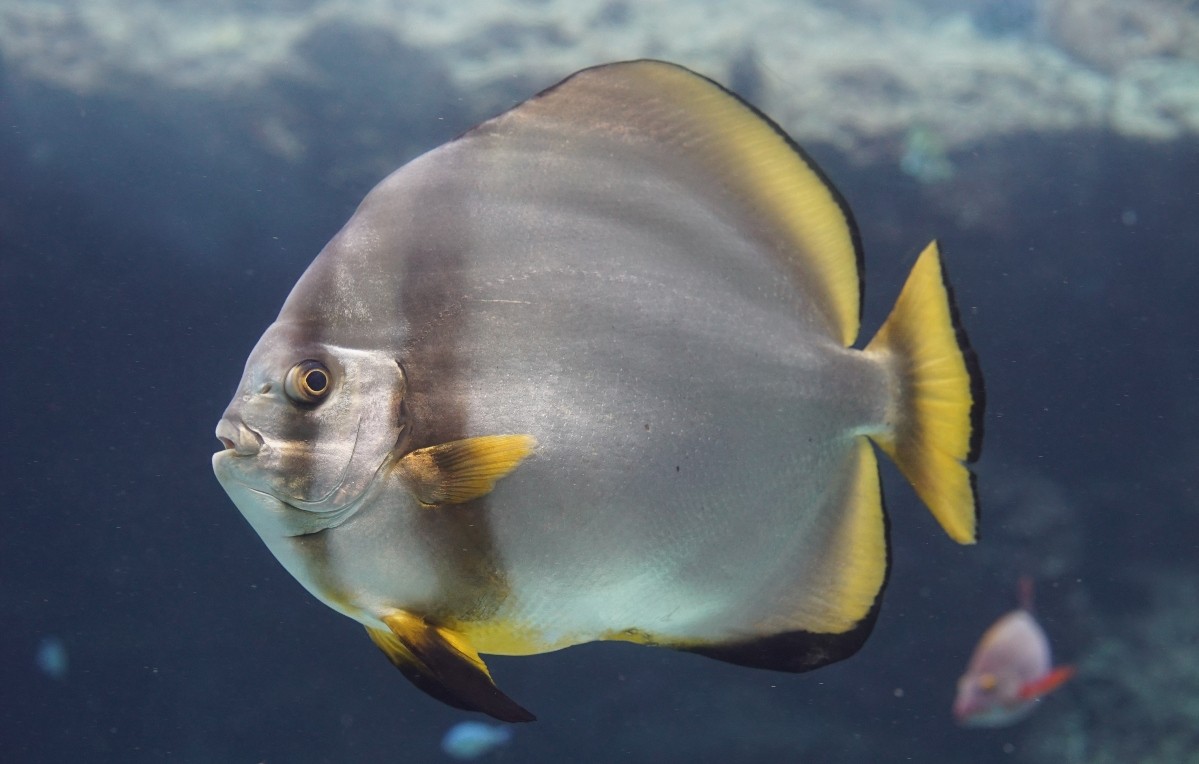
Adult
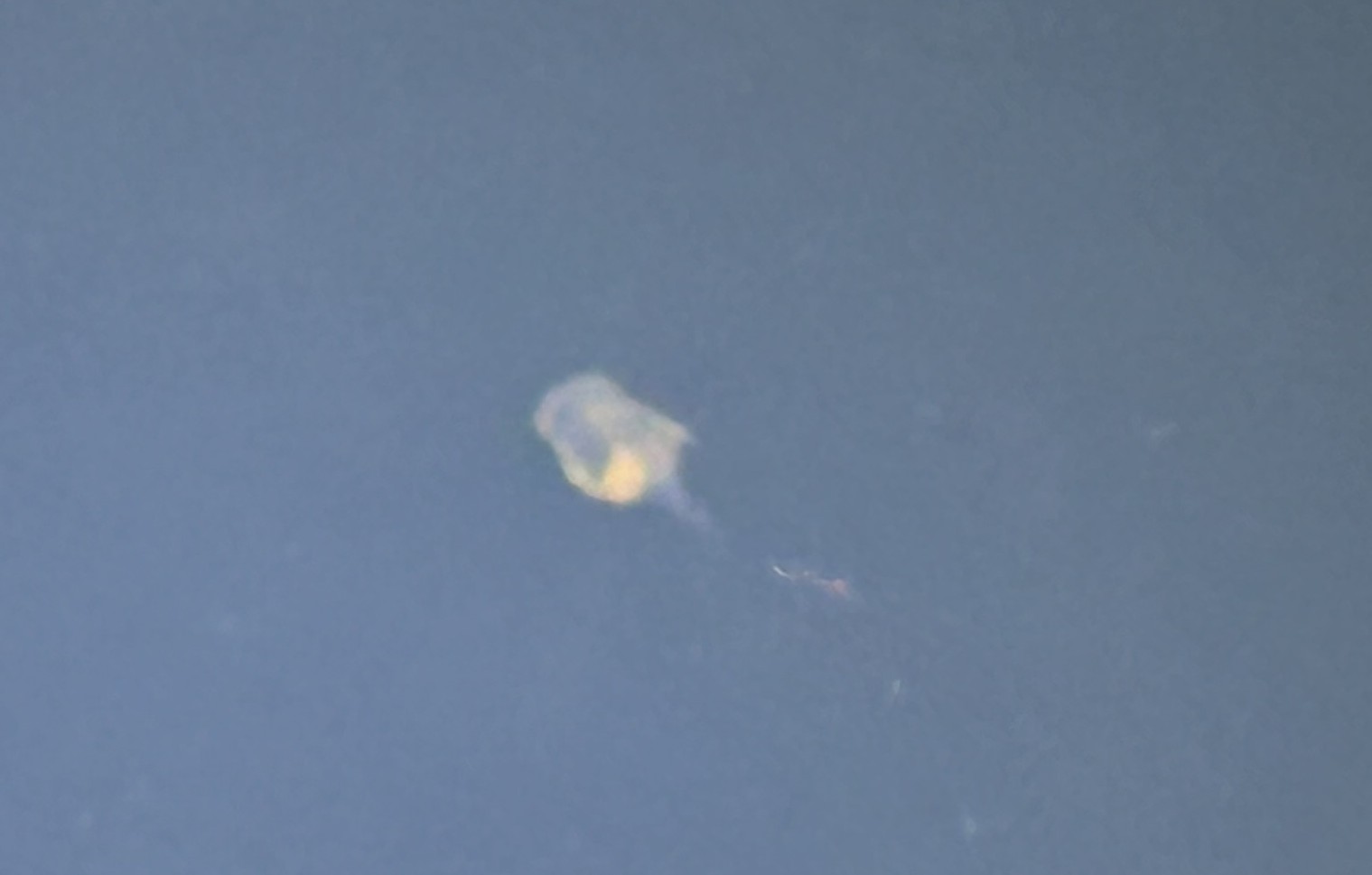
13 days after hatching
(Total length 8 mm)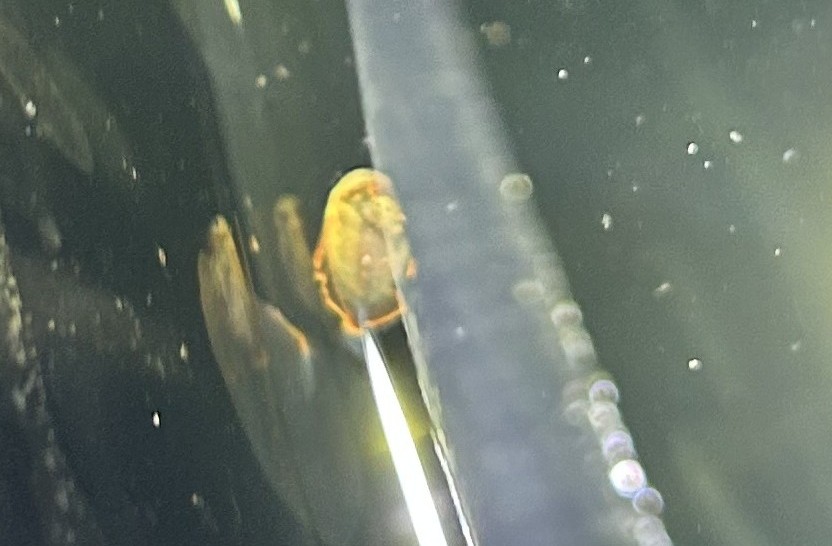
15 days after hatching
(Total length 10 mm)
This successful breeding has shown that during the transition from the larval to the juvenile stage, this species undergoes significant changes in both appearance and swimming behavior. This finding deepens our understanding of coloration and morphology displayed by the juveniles of this species. This contributes to research on the early stages of life of marine fish and their mimicry behaviors. At Okinawa Churaumi Aquarium, breeding programs enable us to deepen our understanding of marine creatures, and contribute to their conservation.
Inquiries
Okinawa Churaumi Aquarium
905-0206
424 Ishikawa, Motobu-cho, Kunigami-gun, Okinawa Prefecture
TEL:+81-980-48-3748
FAX:+81-980-48-4444