Topics
2026.07.29
World First: Successful Artificial Insemination, Incubation, and Hatching of Bigeye Pacific Opah — A Breakthrough in Fish Reproduction Research
At Okinawa Churaumi Aquarium, we have achieved the world’s first successful artificial fertilization, incubation, and hatching of the bigeye Pacific opah.
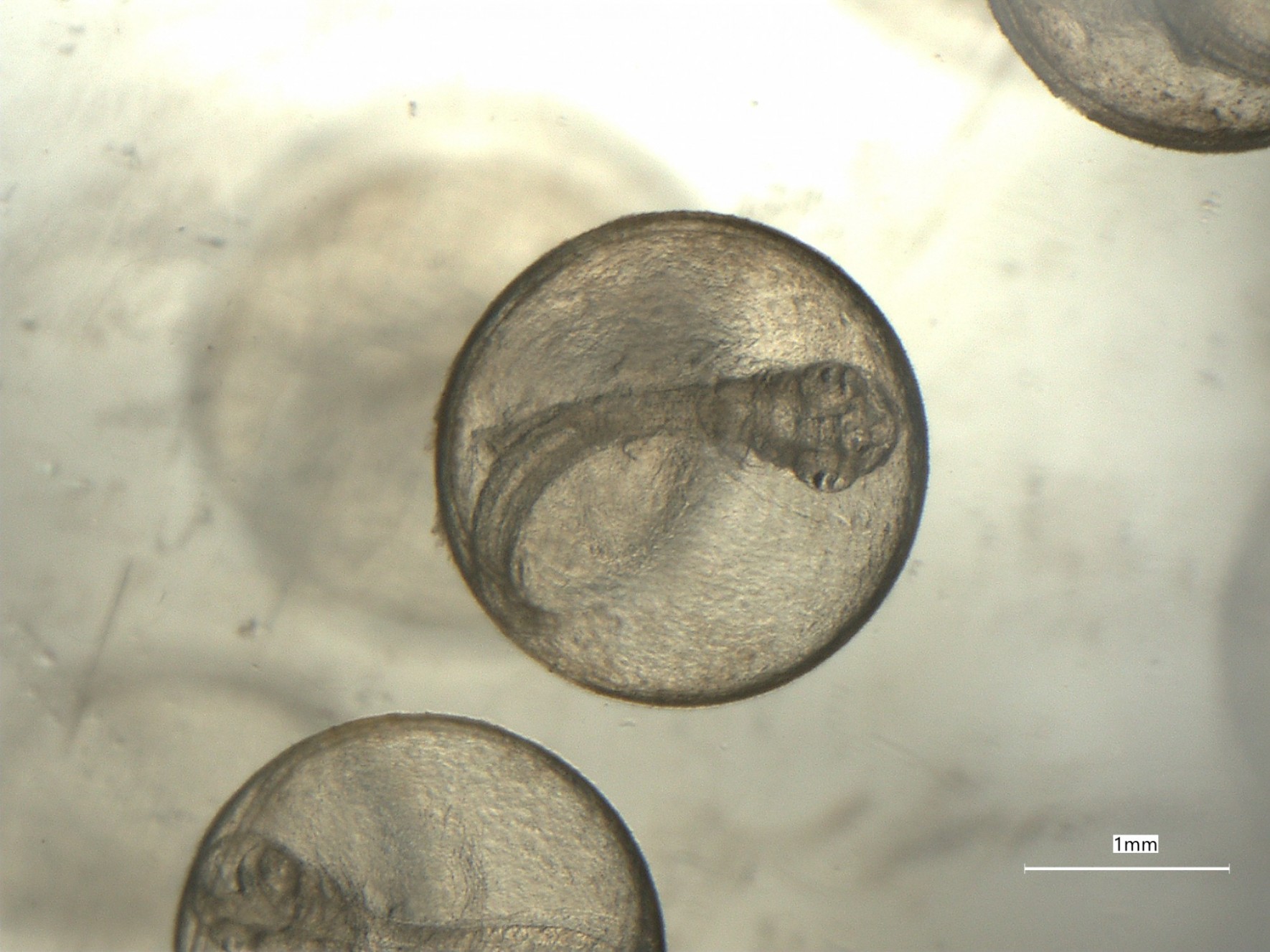
A fertilized egg of the bigeye Pacific opah (Day 12)
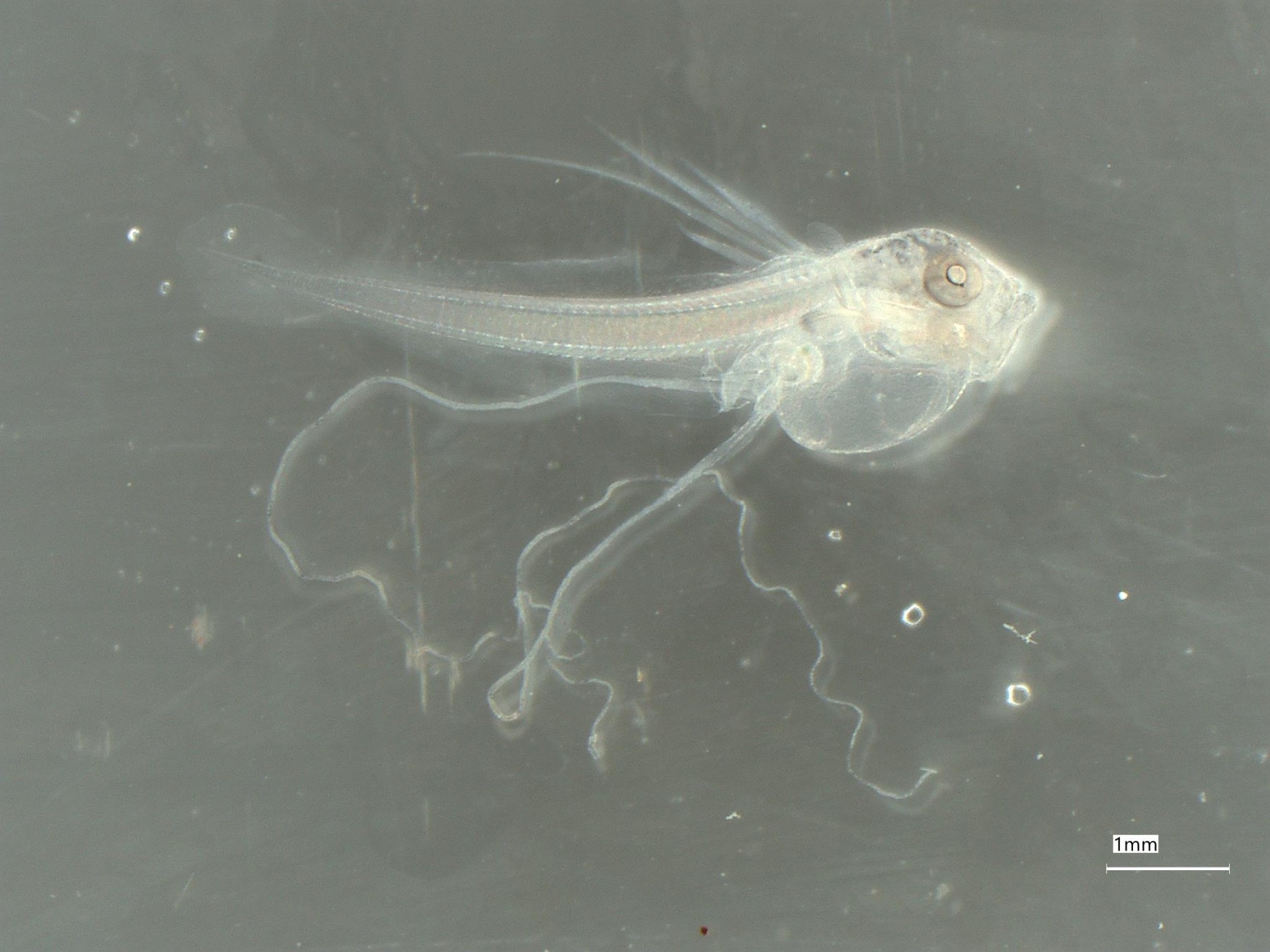
Newly hatched larvae
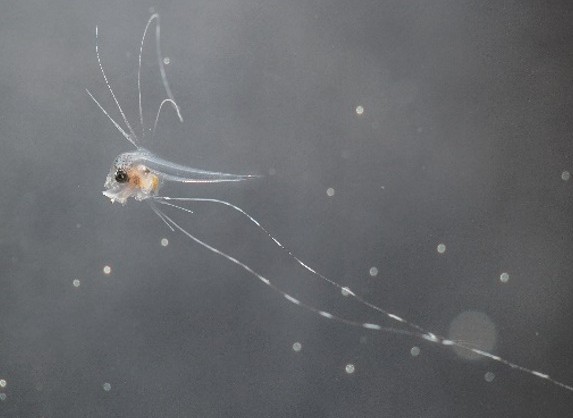
Larvae five days after hatching (approx. 7 mm)
Place of exhibit
Journey into the Deep Sea Deep Sea Experience Room
*Exhibit may close depending on the condition of the animals.
※The exhibit was discontinued as of July 31.
The bigeye Pacific opah is a large fish species that inhabits the open ocean with much of its ecology and life history unknown. To better understand its reproductive cycle and biology, for many years, we have examined reproductive glands collected at local fish markets in Okinawa Prefecture. In this study, we collected eggs and sperm from mature individuals caught off the coast of Okinawa, and successfully performed artificial fertilization. From these results, and by successfully achieving artificial hatching, we obtained basic data on the development process from fertilization to hatching. These findings provide important insights not only into the reproduction and development of the bigeye Pacific opah, but also into understanding the development of other large pelagic fish species that have been relatively understudied.
The newly hatched larvae were approximately 7 mm in length, with a slender translucent body and two elongated pelvic fins.
We will continue to observe and document the larvae’s growth and appearance, and by studying when they start feeding, we will better understand its early life stages.
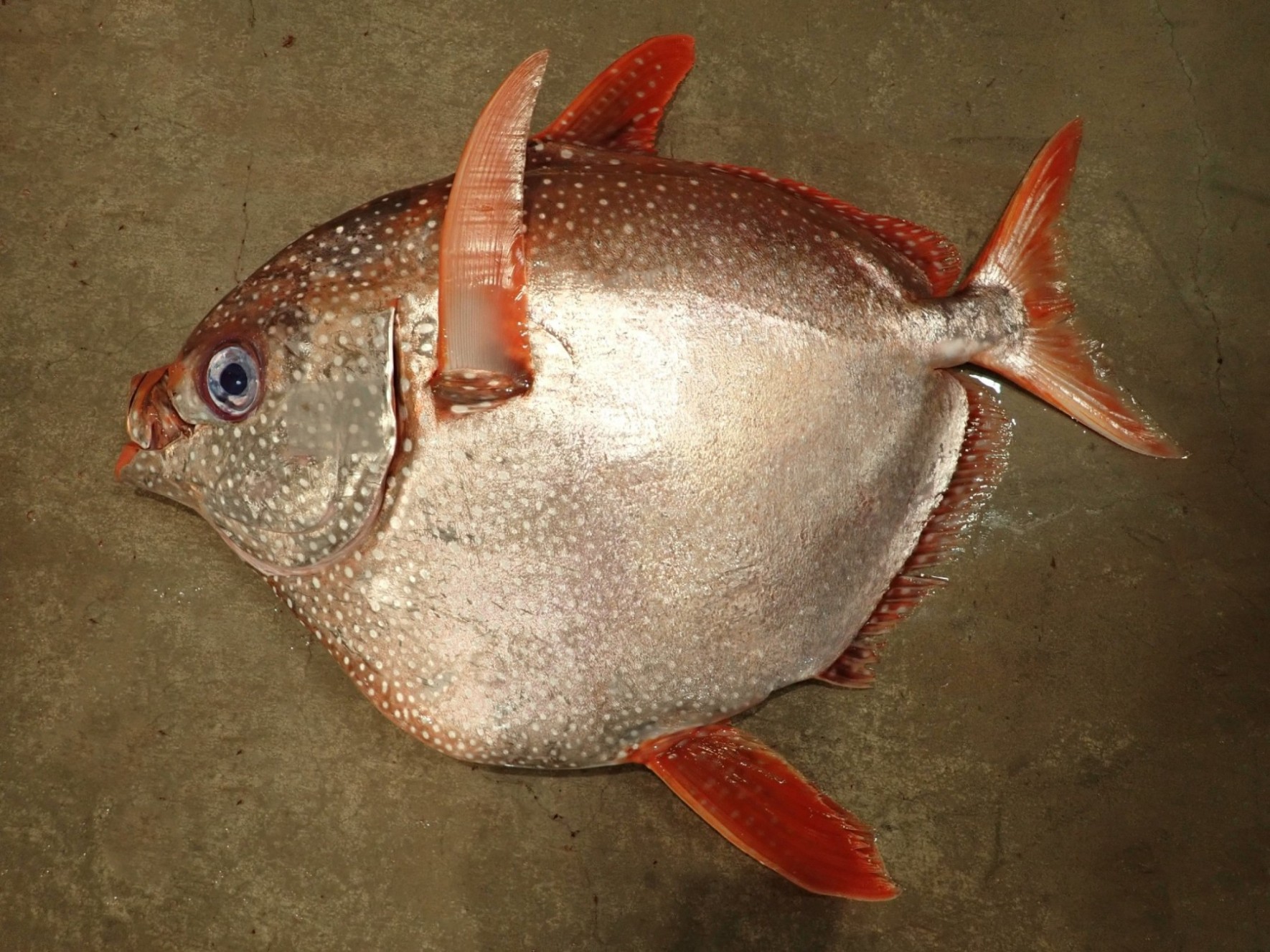
Adult bigeye Pacific opah caught and unloaded
<Bigeye Pacific Opah>
Scientific name:Lampris megalopsis
The bigeye Pacific opah is a large deep-bodied fish, in the same order (Lampriformes) as the giant oarfish. There is limited scientific data on this species. Its key features are its silvery, disc-shaped body and vivid red fins. It is found from surface waters to depths of 500 meters in open seas. It is also the only fish known to have whole-body endothermy, maintaining a higher body temperature than the surrounding seawater, and has evolved to suit the open sea.
At Okinawa Churaumi Aquarium, we will continue to promote research on marine life and accumulate knowledge and understanding to contribute to the conservation and understanding of the marine environment.
Inquiries
Okinawa Churaumi Aquarium
905-0206
424 Ishikawa, Motobu-cho, Kunigami-gun, Okinawa Prefecture
TEL:+81-980-48-3748
FAX:+81-980-48-4444
Pickup